Car leather lives a harder life than the leather sofa in your living room. It sits behind glass in direct sun, gets dried out by the heater all winter, and takes a slide across the side bolster every time you get in. Around Chicago, add road salt and slush tracked in on boots and coats from November to March.
We're Maximus Leather Repair, a mobile leather repair team based in Mount Prospect, and we've been fixing car seats and interiors for more than 10 years. A lot of the damage we repair (cracked bolsters, faded seats, worn steering wheels) could have been slowed down with a few minutes of care each month. This is the routine we give drivers, plus the signs that care alone won't fix it any more.
First, know what kind of leather you have
The right care depends on the material, and car interiors use a few different kinds:
- Coated (pigmented) leather. Most modern car leather has a colored, protective topcoat. Dirt and wear attack that coating first, so gentle cleaning matters more than heavy conditioning.
- Aniline and semi-aniline leather. Found in some luxury cars. It has little or no topcoat, so it feels softer but stains and fades more easily.
- Perforated leather. Common on heated and cooled seats. The small holes can clog or let liquid into the seat, so it needs extra care with cleaners.
- Synthetic leather and vinyl. Many cars use leatherette (sold under names like MB-Tex or SensaTec). It doesn't need conditioning, but it still cracks from sun and heat.
Quick test: put a single drop of water on a hidden spot. If it beads up, the leather is coated. If it soaks in and darkens the leather, it's aniline or has lost its coating, so be extra gentle. Your owner's manual will usually tell you which you have, too.
The quick routine: every week or two
- Vacuum the seams and creases with a soft brush attachment. Grit that sits in the creases rubs against the leather every time you sit down, like fine sandpaper.
- Wipe the seats, armrests and steering wheel with a clean microfiber cloth, dry or very lightly damp.
- Deal with spills right away. Blot, don't rub. Coffee, soda and sunscreen are much easier to get out in the first few minutes.
- Watch for dye transfer on light seats. New dark jeans can leave a blue tint on beige or gray leather. It comes off easily if you catch it early and sets in if you don't.
Clean and condition: every 1 to 3 months
- Vacuum first. Get the crumbs and grit out of the seams so you don't grind them in while cleaning.
- Spot test. Try your cleaner on a hidden area, like the lower side of the seat, and check that no color comes off on the cloth.
- Clean one panel at a time. Use a pH-balanced cleaner made for automotive leather. Spray it onto a soft brush or microfiber cloth, not the seat, and work it in gently. You want a light foam, not a wet seat.
- Wipe off the residue with a clean, slightly damp microfiber cloth, then let the leather dry.
- Condition lightly. Apply a thin coat of leather conditioner with a cloth and buff off the excess after a few minutes. Coated leather only absorbs a little, and leftover conditioner leaves a greasy film that attracts dirt.
- Protect from UV. If your conditioner doesn't include UV protection, add a separate leather protectant on the seats and dash areas that sit in the sun.
How often depends on how the car is used:
| Your car | Vacuum and wipe | Clean and condition |
|---|---|---|
| Daily driver, light-colored leather | Weekly | Monthly |
| Daily driver, dark leather | Every 2 weeks | Every 2 to 3 months |
| Kids, pets or rideshare passengers | Weekly | Monthly |
| Garage-kept or weekend car | Monthly | 2 to 3 times a year |
Whatever your schedule, do a full clean and condition before winter and again once the salt season is over.
What Chicago's seasons do to your interior
Summer: sun and heat. UV light fades color and dries the leather out, especially on the dash, the top of the rear seat and the driver's side. A parked car in July gets hot enough to speed that up. Use a windshield sunshade, park in the shade or a garage when you can, consider UV-blocking window tint, and use a protectant with UV filters.
Winter: dry heat and road salt. Running the heater for months pulls moisture out of the leather, and that's when creases turn into cracks. Salt and slush from boots and coats leave white marks on the lower door panels, seat edges and carpets. Wipe salt off with a damp cloth as soon as you see it rather than letting it build up, and keep up the conditioning through the winter.
Spring and fall: catch-up time. These are the best times for a deep clean: once in spring to get the winter salt out, and once in fall to prepare the leather for the heating season. We cover the weather side in more detail in Chicago weather and leather care.
Don't forget the steering wheel, armrests and door panels
Seats get most of the attention, but the parts you touch every day often wear out first:
- Steering wheel. Hand oils, lotion and hand sanitizer break down the finish, which turns the wheel shiny and sticky, then worn. Wipe it often with a slightly damp cloth, and let sanitizer dry on your hands before you drive.
- Center console and armrests. Elbows rub the same spot on every drive. Vinyl armrests in particular tend to crack along the edges.
- Door panels and pulls. They collect salt, skin oils and scuffs from shoes. Include them every time you clean the seats.
Products and habits that damage car leather
- All-purpose cleaners, dish soap and glass cleaner. Too harsh for the topcoat. Over time they leave leather dull and dry.
- Alcohol, sanitizer wipes and many baby wipes. Fine for a one-off emergency, but repeated use strips the finish.
- Melamine sponges ("magic erasers"). They're abrasive and remove the color and coating along with the dirt.
- Silicone shine sprays. They make leather look glossy for a week but leave a slippery film and can make future repairs harder.
- Soaking the leather. Too much water, especially on perforated seats, can stain the leather and get into the foam and electronics underneath.
- Sharp things in back pockets. Keys, tools and studded jeans cause many of the cuts and scuffs we repair. So do pets' claws, so a seat cover for the dog is worth it.
We've put together a longer list in leather care mistakes that shorten its life.
What neglect looks like, and what can still be fixed
These are real repairs from our project gallery. Each one started as wear that regular care would have slowed down.


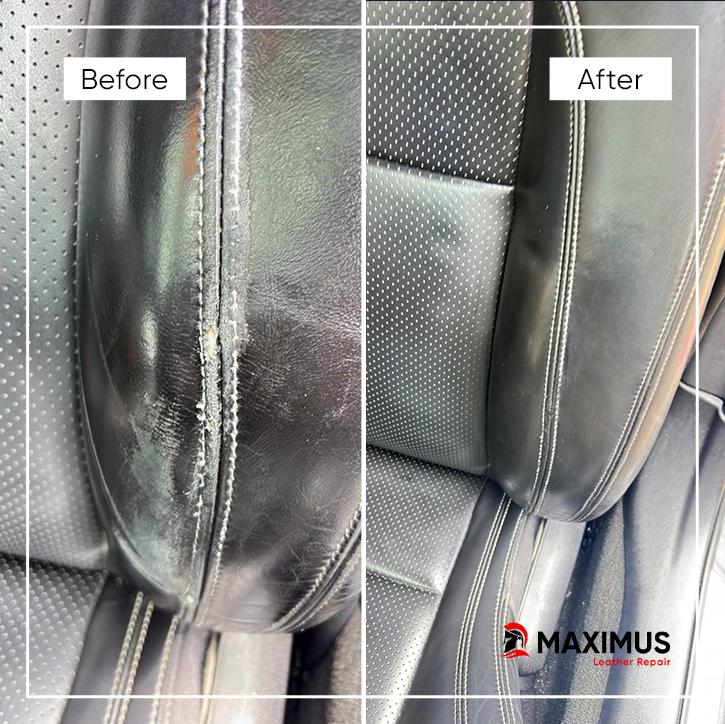
When care isn't enough: signs it's time for a repair
Cleaning and conditioning keep healthy leather healthy. They can't fix damage that's already there. It's time for a repair when you see:
- Cracks you can feel with a fingernail, not just fine surface lines
- Color worn away to a lighter layer or to the backing, usually on the driver's side bolster
- A seam starting to split, or a cut, tear or burn
- A finish that feels sticky or is peeling, often on steering wheels and armrests
- Fading that cleaning doesn't improve
- Smoke, pet or mildew smells that keep coming back (that's a job for odor removal, not air freshener)
Small cracks turn into tears and a loose seam keeps opening, so the earlier you fix them, the smaller (and cheaper) the repair.
How we handle car interior repairs
We do car seat and interior repair at your home, office or dealership lot, so there's no dropping the car off at a shop.
- Photos first. Send a few pictures with the contact form or call (224) 833-4909 and describe the damage. You'll get a free estimate and an honest idea of what's possible.
- We come to your car and check the damage up close, including the seams, foam and backing.
- Color matching on-site. We mix the colorant to your interior's exact shade and sheen.
- The repair. Many seat, armrest and panel repairs are done in a single visit with the seat still in the car. Bigger jobs take longer, and we'll give you a clear timeline up front.
- Seal and protect. We finish with a protective topcoat and leave you with care tips for that specific leather.
We're based in Mount Prospect and work across Chicago and the suburbs, including Arlington Heights, Buffalo Grove, Glenview, Evanston, Naperville, Aurora and Waukegan, plus Kenosha and Milwaukee in southeastern Wisconsin. If you'd rather leave the regular deep clean to us too, see our leather cleaning and protection service.
Frequently asked questions
How often should I condition my car's leather seats?
For a daily driver, every one to three months is about right: monthly for light-colored seats or cars with kids and pets, every two to three months for dark seats. Most car leather has a protective coating, so use a thin coat and buff off any excess.
Can I clean car leather with baby wipes or household cleaners?
It's best not to. All-purpose cleaners, dish soap, alcohol and many wipes can strip the protective topcoat over time, which leaves the leather dull and more likely to crack. Use a pH-balanced cleaner made for automotive leather.
How do I clean perforated or ventilated leather seats?
Spray the cleaner onto a microfiber cloth or soft brush, never directly onto the seat, and work with as little liquid as possible. Liquid that soaks into the holes can clog them or reach the heating and cooling parts underneath.
Can cracked car leather be repaired?
Yes. Cracks can be filled, re-colored and sealed so they blend in, and even a bolster worn through to the backing can usually be rebuilt. Conditioner can't close a crack, though, and cracks keep spreading, so it's cheaper to fix them early.